
Property types
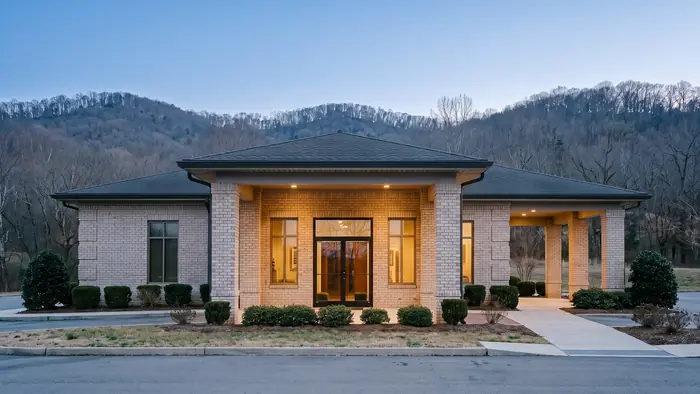
Medical & Professional Office
Built like office, specified like a clinic, and clustered around the hospital campuses.
Home/Property Types/Medical & Professional Office
TL;DR
Medical office space in North Georgia clusters around the Northeast Georgia Medical Center campuses in Gainesville and Braselton, with practice space distributed through the county seats. It differs from standard office in plumbing, electrical load, room layout, mechanical design and parking demand.
Overview
Follow the hospital.
Medical office locates near referral sources and near patients, which in this region means the Northeast Georgia Medical Center system exerts real gravitational pull. The Gainesville and Braselton campuses have drawn practice space, supporting services and related retail around them.
Away from the hospital campuses, medical space is more dispersed: dental, optometry, physical therapy and primary care serving a county rather than a referral network, and frequently occupying converted or purpose-built space near the county seat.
For a practice choosing between those, the question is where patients actually come from. A specialty dependent on hospital referrals belongs near the campus. A primary care practice belongs near its patients.
Specification
Why medical is its own category.
Medical office looks like office and is built like something else. The plumbing runs to more rooms. The electrical load is higher and often needs dedicated circuits for equipment. The layout is a corridor of small rooms rather than an open floor, which changes the mechanical design and the cost per square foot to build out.
Parking demand is higher too, because patients arrive and leave continuously rather than occupying a desk all day. A parking ratio adequate for professional office will fail a busy practice.
Then there are use-specific requirements: imaging equipment can need shielding and structural capacity, procedure rooms have their own standards, and waste handling has regulatory requirements. These are specialty questions and they belong with your architect and your compliance advisers, not with a broker’s assurance.
The practical consequence: second-generation medical space is disproportionately valuable, because the infrastructure that makes a medical build-out expensive is already installed.
Questions
What operators and owners ask.
Is second-generation medical space worth paying more for?
Usually yes. The plumbing, electrical and layout that make a medical build-out expensive are already in place. Verify that what exists is serviceable and meets current code, but the saving is often substantial.
How much parking does a medical practice need?
More than comparable professional office, because patient turnover is continuous. Check the jurisdiction’s medical-use requirement and test it against your realistic appointment volume (the code minimum is a floor, not a forecast.
Can any office space be converted to medical use?
Physically, often) at a cost. Plumbing to multiple rooms is the usual constraint, along with electrical capacity and mechanical design. Zoning also has to permit the use. Have an architect assess a candidate before you commit.
Do you advise on equipment and compliance requirements?
No. Imaging shielding, procedure room standards and medical waste handling are specialty matters for your architect, equipment vendors and compliance advisers. Our part is finding space that can accommodate what they specify.
Our residential division
Physicians relocating to the area
Practitioners moving to North Georgia to join a practice can work with our residential division on the home search.
Gold Peach Commercial
Start with where your patients are.
Referral-driven or community-driven. That single answer picks the submarket.